Monday, June 27, 2011

Verizon's 4G network fastest in Charlotte, study says


Verizon's 4G wireless network is the fastest in Charlotte, according to a new study out today from PCMag.com. The survey, the second in an annual series from the respected tech magazine and website, includes road-testing of eight networks from six wireless carriers across 21 cities and four rural regions.


Verizon's 4G LTE won in 20 of the 21 cities, making it king of the digital hill in the PCMag.com test. It logged average download speeds topping 12 Mbps in Charlotte. That, the magazine notes, is faster than most people's home internet connection. All four of the major carriers' 4G networks did well in Charlotte, the study found.

The magazine did the research by driving around and making phone calls on Android 2.2-powered phones. The fastest Verizon spot the researchers located in Charlotte was just "east of Midtown" (meaning the old Midtown mall?), where they got 31 Mbps download speeds. T-Mobile came in second in Charlotte.

The results will perhaps confirm what my friends on AT&T have long suspected. But the AT&T guys, no longer blessed by their long monopoly on the iPhone, are running hard to build up their network in Charlotte. We'll see what happens in the long haul.

I say it's just good to have head-to-head numbers being published openly. Most of the network performance data nationally either comes from the carriers themselves or from researchers who sell the data to the carriers. In both cases, consumers rarely, if ever, get to see city-by-city performance data, and thus have no sure way of knowing which network is better. Given how intensely competitive the wireless industry is today, I'm sure the carriers who didn't come out on top here will say they still don't.




Thursday, June 23, 2011

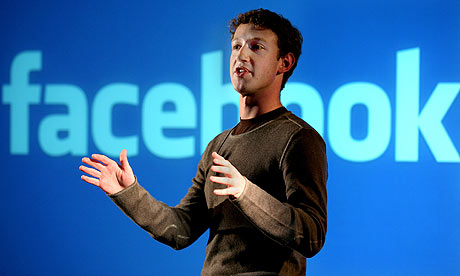
Facebook is turning into serious business

It used to be that businesses, especially small businesses, just scratched their heads when it came to Facebook. Sure a lot of people were on it, but companies were used to thinking about one main channel for reaching customers: advertising. And Facebook's advertising wasn't exactly the magic bullet -- people were so busy looking at cute kid pics that they barely noticed the lonely paid ads floating over there on the far right.

Consultants have been telling companies for years they can't afford not to be present on social networks. Now, it seems they believe them. It's not just about advertising, they've realized. It's about customer engagement, and building customer and brand loyalty. As former Observerite and social media consultant Jeff Elder says, companies can use Facebook as their own personal media "channel" to play their greatest corporate hits for their followers. He's playing host to a meetup on Monday where he'll be talking more about how companies can harness social media to connect with customers. Social media strategists Jason Keath and Corey Creed are plowing the same territory with a series of Web videos from their Social Fresh Academy training center.

All of life, it seems, is on Facebook now, for good or ill. (Even guys in the middle of causing a 16-hour police standoff). It was only a matter of time before corporations got serious about their presence there -- with or without a scientific way to measure the all-important ROI (return on investment). There's been some talk about Facebook's meteoric membership growth perhaps finally peaking. That's probably coming. But will Facebook shrivel up and go the way of MySpace? I wouldn't bet on it.

Wednesday, June 15, 2011

IBMers roll up their sleeves for charity


IBM employees joined their colleagues around the country today in donating their skills and services to local charities in need of technological help. It's part of the technology giant's celebration of its 100th anniversary. More than 200 individuals from 26 area nonprofits benefitted. The United Way of Central Carolinas and NPower Charlotte Region, a nonprofit technology consulting firm, helped put IBM with needy charities. In the picture above, IBMers are helping install solar panels at the Carolina Raptor Center.

"As IBM celebrates its 100 year anniversary as a corporation, it’s fitting to commemorate this milestone by sharing our technology skills across the communities where we live and work," said Anne McNeill of IBM's corporate citizenship office. "By partnering with NPower on Tech Service Day, together we are able to help make a difference in the lives of our neighbors across the Charlotte region."

Good job, guys. Now who wants to come help me figure out how to switch all my iTunes files from my old laptop to the new one?

Tuesday, June 14, 2011

Facebook finally hitting the wall?

Inside Facebook, a site that tracks the metrics of the world's favorite social network, is making a splash with new data suggesting the meteoric growth of Facebook might finally be peaking. After having gained at least 20 million new members a month over the past year, Facebook picked up 13.9 million in April and 11.8 million in May. Could be nothing. Could be Facebook, with nearly half the U.S. population and nearly 700 million worldwide, is finally maxing out.

My highly unscientific theory: Facebook just isn't for everyone. (Lots of commenters to this blog aren't shy about reminding me of that). And as more and more businesses get on Facebook, and more and more people play games, and more and more people "friend" people who aren't actually their friends (the bigger your network, the more impressive your social profile), the more uninteresting/impersonal clutter starts turning up in your news stream. And the more "noise" in your stream, the less likely you are to visit.

That's not to say I think Facebook is in any immediate danger of losing its chokehold on the social networking scene. But the novelty has definitely worn off. The only thing left to hold people is quality/interesting content. And Facebook has little control over that. Its vast unpaid army of content producers -- i.e., us -- decide that. If we get tired of listening to each other blabber on about current events or get weary of thumbing through friends' vacation pictures, we'll eventually stop logging on. The future of Facebook, or any other social network -- or any business, really -- is entirely up to us.

I don't think we've reached the point of Facebook fatigue yet. But if indeed there's a wall out there for Facebook, we're close to it. Mark Zuckerberg and Co. will really have to earn their money from here on.

Tuesday, June 7, 2011

Was uptown unrest accelerated by social media?

As Charlotte-Mecklenburg police continue investigating the recent melee uptown during Memorial Day weekend, questions are being raised about whether social networks played a role. Given the drawing power of Facebook and other social networks, such questions make sense. After all, a German teen recently had to flee her own home after some 1,600 strangers showed up for her birthday party. She'd mistakenly posted her invitation on Facebook as a public invite rather than a private one for her friends. Would it be surprising if posts on social networks helped swell the crowds uptown that night?

CMPD spokesman Rob Tufano would say only that police continue investigating all information gathered concerning the unrest "and that does include social media networks." He wouldn't say whether they've proven any cause-effect link with social networks, though. Sgt. David Schwob, who oversees the school resource officers stationed on local public school campuses, said his office has checked the Facebook pages of eight to 10 juveniles arrested in connection with the unrest, but found no evidence those youths used their networks to rally people to come uptown.

If anybody knows of any such posts going out on Facebook, Twitter or other social networks that night, post a comment. I'd be interested to hear about it.

Friday, May 20, 2011

Why you should be on LinkedIn

Wall Street's all abuzz right now over the monster initial public offering of LinkedIn, the social network aimed at business professionals that until now had been considered something of the ugly stepsister of the social networking world. All the "cool" folks in the tech vanguard, your future Mark Zuckerbergs and Larry Pages, were chatting on Twitter. Everybody and their grandma was posting pictures of their cats and vacations on Facebook. And LinkedIn was, well, that site you joined because somebody at work said you should. And then you checked in once a month, if that. It was far more network than social.

That's changing. And I think that's why you saw Wall Street assign a monster $9 billion valuation to LinkedIn, the highest since Google went public seven years ago. The main reason why LinkedIn looks like a smart bet, at least from where I'm sitting, is LinkedIn Groups. I never checked my page much until I joined several journalism groups about a week ago. Suddenly, I find myself stopping in much more often for insights from colleagues around the country and the world on how best to incorporate online and new media tools into journalistic work.

LinkedIn's true potential value, I think, lies in its Groups. Who doesn't want to shine at work? Who among us doesn't always have the sneaking suspicion someone else in the field knows something valuable that we haven't heard about? Pretty much all of us. So, if you're already on LinkedIn, click the "Groups" tab on your homepage and then click "Groups You May Like" to get some suggestions. Or, use the option to start one yourself. One of the many local groups, Charlotte Business Professionals, lists more than 9,000 members.

A few cautions:


  • Don't join more groups than you have time to follow -- notifications from 12 groups will drive you batty.


  • You'll find interesting people in the groups. People you'll wish you knew. Don't try to join their personal networks just because you saw their profile. Some likely will find it annoying -- unless you can send them a really persuasive message introducing yourself and your reason for wanting to link to them. You can "follow" them instead (still creepy sounding, I know) and keep posted on what they're saying, without begging them to join their network.


  • And in the same vein, don't accept random LinkedIn requests from strangers -- unless they offer a credible reason why you shouldn't view them as a nuisance to be flicked away. I don't know this for certain, but I suspect spammers are starting to infiltrate the networks.


  • Don't integrate your Twitter feeds into your LinkedIn page if you're going to be tweeting crazy personal stuff that might make your Twitter buddies crack up, while professional counterparts on LinkedIn are cringing or just wondering if you've lost your marbles.

Wednesday, May 18, 2011

How to shoot video that doesn't suck

Steve Stockman, director of commercials and films (including Sally Field's 2006 terminal-disease chucklefest "Two Weeks") gets the award for Most Entertaining Tech Book Title to Cross My Desk Recently. "How To Shoot Video That Doesn't Suck" -- that's his new book -- isn't just memorably titled, it also seems to be just what so many have been longing for: practical, non-technical help for all those wannabe YouTube stars clogging the internet with lame videos. (I'll admit, I've contributed to the problem a time or two. But to my credit, I did NOT go to YouTube with my 15-minute iPhone video of my 10-year-old starring in the church Easter play. You can thank me later).

Won't try to summarize the whole book, but Stockman offers a 12-pack of beginner tips that might make your next family vacation video a little less excruciating:

  1. Think in shots. (In other words, shoot deliberately. Don't just run the camera nonstop, like I did at said Easter play).
  2. Don't shoot till you see the whites of their (your subjects') eyes.
  3. Keep your shots under 10 seconds long.
  4. Zoom with your feet (not with the zoom function -- it produces shakier video).
  5. Stand still! Stop fidgeting! And no zooming during shots!
  6. Keep the light behind you.
  7. Turn off the camera's digital effects (leave "night-vision," posterization and such for the editing process).
  8. Focus on what really interests you.
  9. Don't use amateurish titles.
  10. Keep your video short. (The average time spent looking at a web page, he notes, is 15 seconds).
  11. Use an external microphone.
  12. Take the quality pledge (Pretty funny, but long. It begins by asking you to "promise not to inflict lame video on my friends, relatives, customers, or complete strangers who might find it on YouTube because I put something about sex in the title.").
So, there you go. A quick guide for shooting non-sucky video.